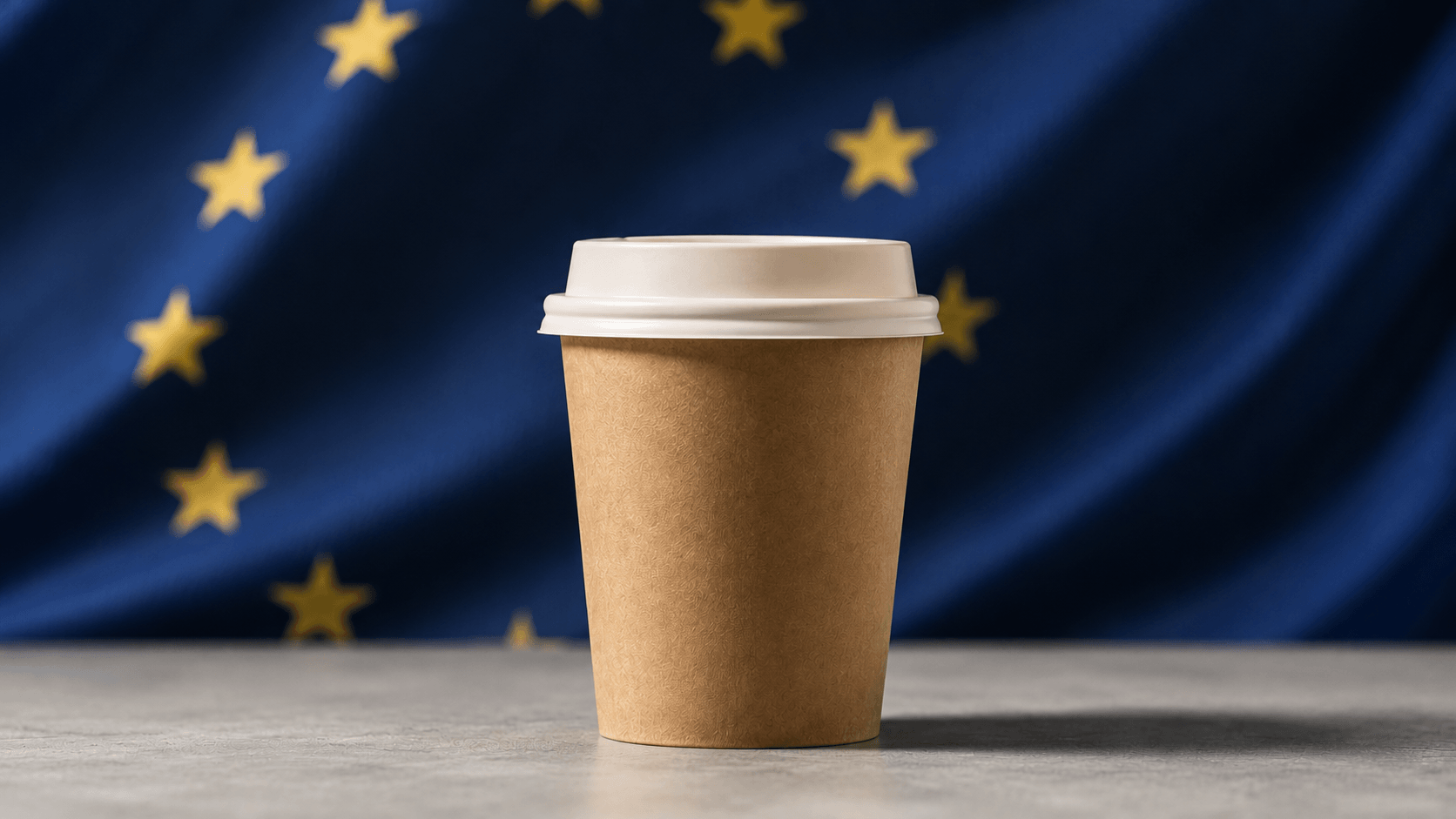
With Government Decree 98/2026 (29 June), published in the Hungarian Official Gazette (Magyar Közlöny), the Government amended the earlier Decree 301/2021 on restricting certain single-use plastic products. From 1 July 2026 the ban on placing them on the market is no longer absolute for paper cups with a minimal plastic content: it now applies only to beverage cups containing more than 10% plastic by weight. A proportionate and targeted ban — a result Confindustria Ungheria actively helped to achieve.
The context. In its original version, Decree 301/2021 banned, from 1 July 2026, the placing on the market of paper beverage cups containing plastic, transposing the SUP Directive (EU) 2019/904 — in particular Article 4 on consumption reduction — and to be read together with the PPWR Regulation (EU) 2025/40. The critical point: an absolute ban was not consistent with the distinction, inherent in EU law, between products to be banned and products subject to reduction targets, taking into account the availability of mature alternatives.
The action. At the request of SEDA International Packaging Group — a company that is a member of Confindustria in Italy — Confindustria Ungheria intervened formally on 24 April 2026 with the Ministry of Energy and, on 29 April, with the Ministries of the Environment and of Foreign Affairs, in line with the dialogue already under way in Brussels through the EPPA (European Paper Packaging Alliance). The arguments: the still insufficient technological maturity of plastic-free alternatives — as also confirmed by a November 2025 report of the French government —, consistency with EU law and the French model, with a conditional mechanism and a 2030 deadline.
The result. The review, carried out under an urgent procedure, ended with a proportionate ban aligned with the European framework. A concrete example of how representation — at national and European level — can translate into more balanced rules for businesses.