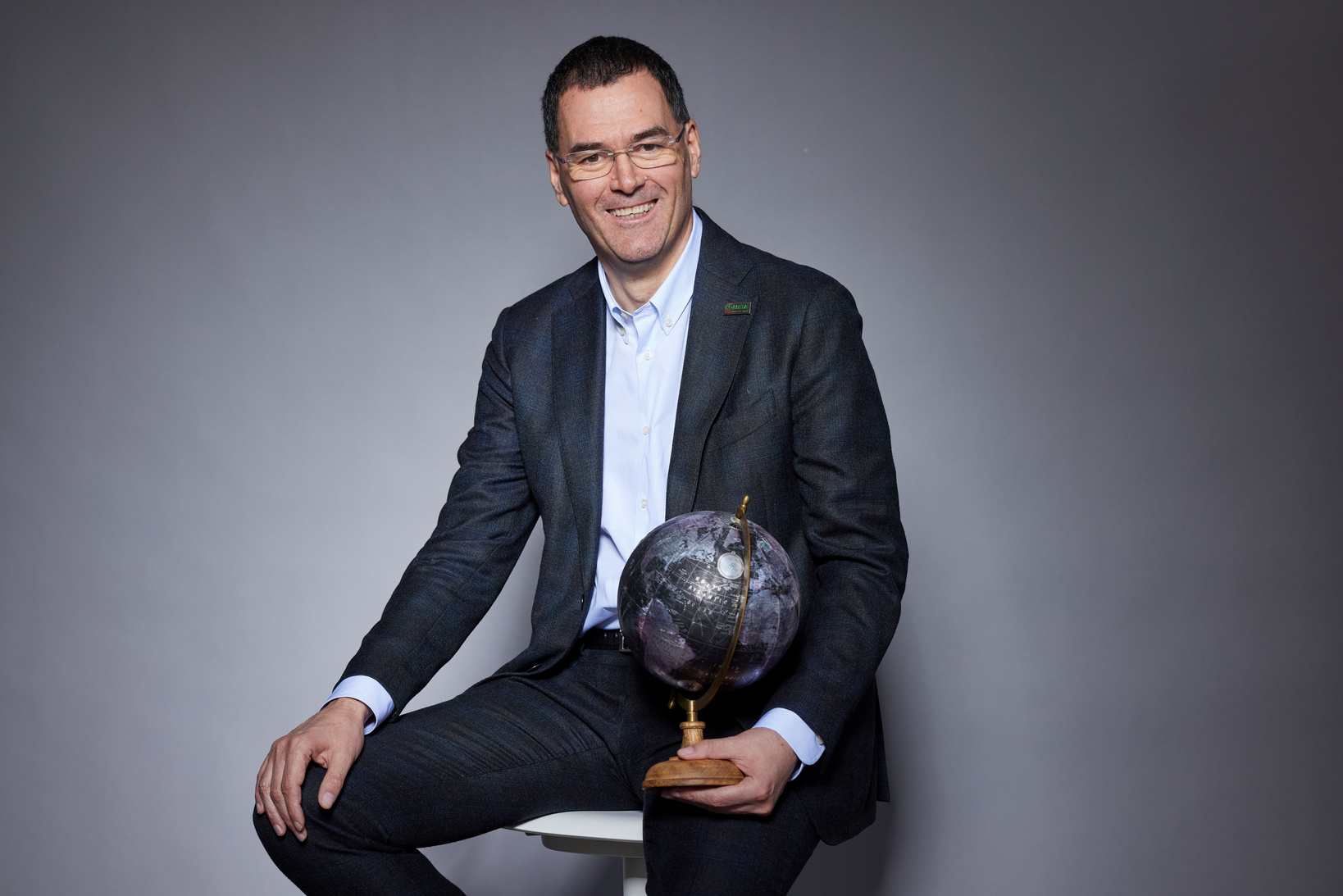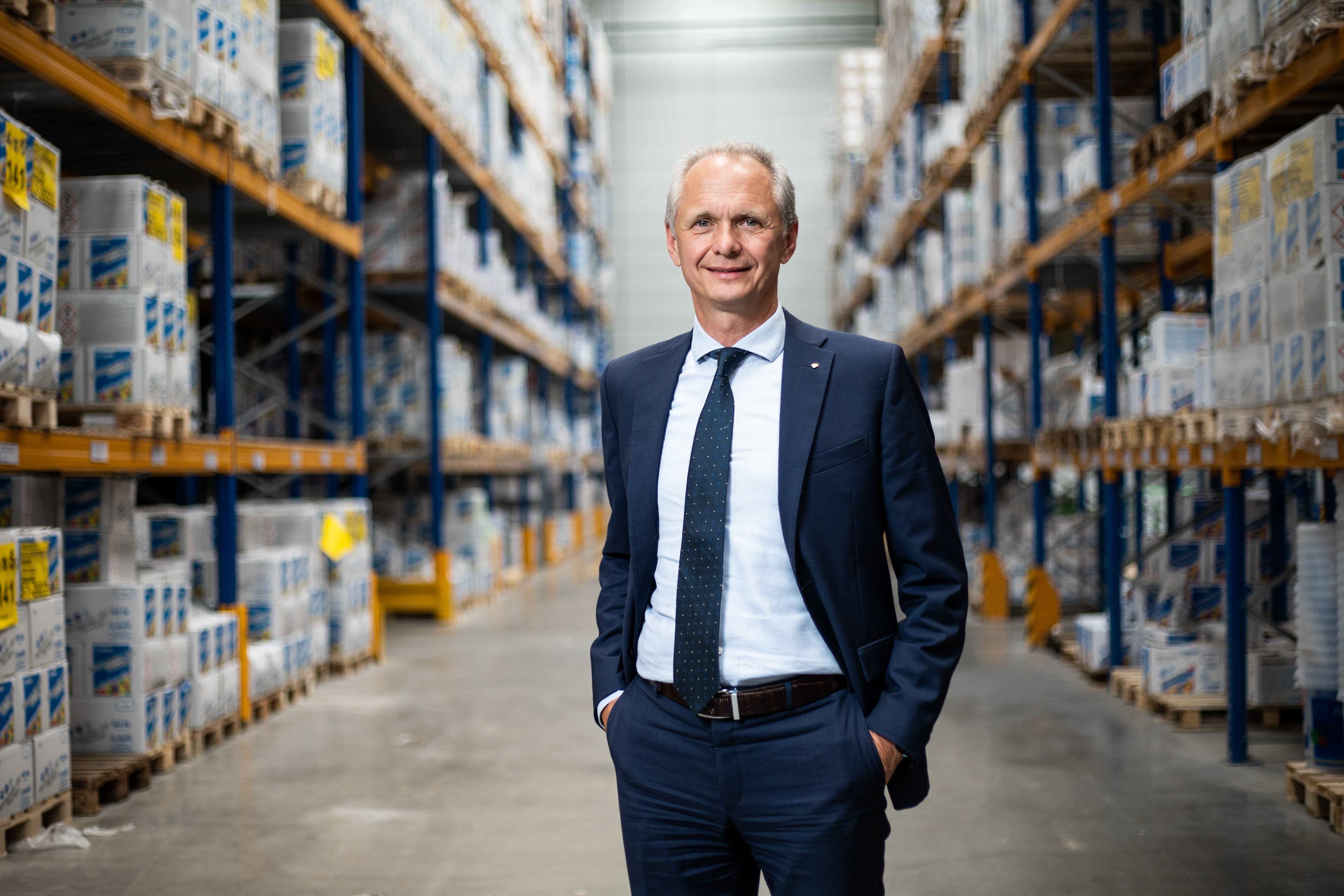
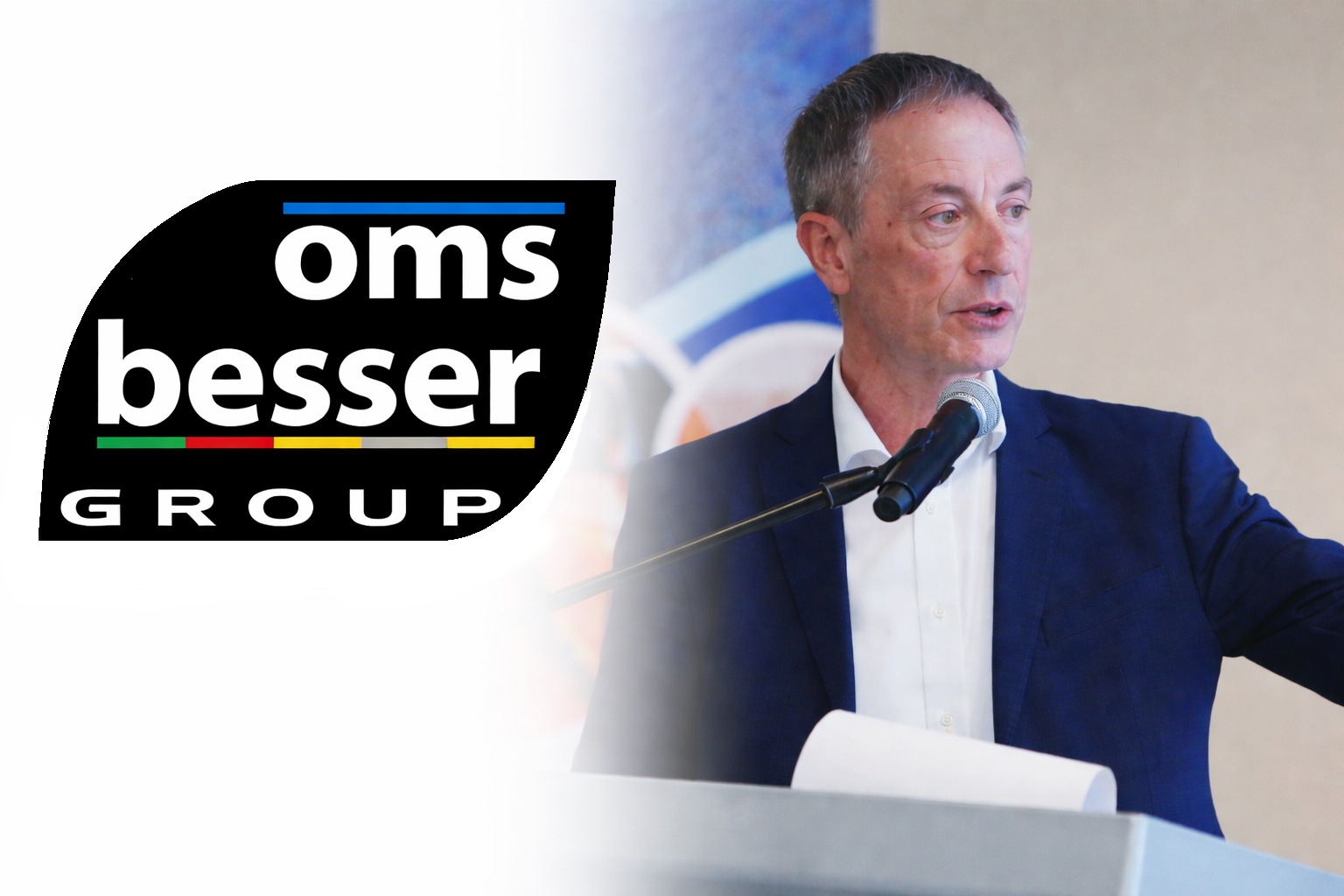
Our Director, Nikolett Tommasi, met with Mr Giuseppe Comi, Sales & Business Development Manager of OMS Besser Group, to explore the Group's international growth path and the strategic role of Hungary in the company's industrial and commercial development. Founded in Italy and now present in several European countries, OMS Besser is an industrial company that has made customer proximity, innovation and service quality the cornerstones of its expansion.
OMS Besser Group is now present in several European countries. What have been the main drivers of your international commercial development in recent years?
OMS Besser Group is an Italian industrial company with over 55 years of experience in the thermoplastics processing sector. After consolidating its position in the domestic market, the Group began its internationalisation path in 1996, precisely in Hungary, in response to a specific customer need. That first experience also shaped our approach in the years that followed: growing abroad not as a mere search for lower costs, but as an industrial choice geared towards proximity to the customer, service quality and the ability to develop new opportunities in local markets. On this basis, our subsequent industrial presences also developed in Romania, from 2011, and in Poland, from 2014. Our model has therefore been built around a widespread territorial presence, capable of supporting customers more directly and of strengthening a commercial strategy based on diversification. In an increasingly unstable economic context subject to rapid change, we believe that diversification remains one of the most effective tools for reducing business risk. This is why we work in various markets, from household appliances to electrical, industrial and, more recently, the automotive and medical devices sectors.
In this context, what strategic role does Hungary play within your industrial and commercial model?
Besser Hungary has always represented, for our Group, a benchmark operation outside Italian borders. Over time it has established itself as a model site in several respects and has also played an important role in the Group's overall development. In terms of certifications, it has been a point of reference for years thanks, among others, to the IATF 16949 for the automotive sector, a standard that today constitutes an internal benchmark for the other production sites as well. From an organisational and technological standpoint, it was also the first operation in the Group to introduce the SAP management system, contributing to the development of skills in the cloud and cybersecurity fields. Hungary also stands out for the level of automation achieved and for its ability to integrate advanced technologies into production processes, from overmoulding to two- and three-component applications, through to various finishing operations such as pad printing, painting, laser and polyurethane. All this has made it, over the years, a central hub in our European industrial system.
What opportunities do you see in the coming years for the plastic moulding sector in Hungary, particularly in the automotive segment?
The sector is going through a phase of profound transformation, influenced by geopolitical, industrial and technological factors. On the one hand, the years following the pandemic highlighted the fragility of supply chains that were too long and complex, prompting many companies to rethink production localisation in a logic closer to European markets. On the other hand, the crisis that affected the German market accelerated processes of industrial reorganisation that are already producing effects on the entire continental manufacturing chain. In parallel, the automotive sector is undergoing a structural transition. The shift towards electric mobility changes not only the end market, but also the technical composition of the vehicle and, consequently, the opportunities for thermoplastic components. In this scenario, Hungary has positioned itself very interestingly, attracting significant investments from OEMs and fostering the growth of a diversified chain of Tier 1 and Tier 2 suppliers. For a group like ours, this represents a context rich in potential, which however requires technical skills, speed of adaptation and strong integration with strategic partners. This is why we work closely both with plastics producers and with suppliers of advanced automation systems, according to a logic of vertical integration. At the same time, we also place great value on horizontal collaboration with the associative world and with the players of the industrial ecosystem, through organisations such as Confindustria, MAGE and HIPA. In increasingly demanding markets, competitiveness is also built in this way.
How is your customers' demand evolving, in terms of innovation, sustainability and speed of product development?
In our relationship with customers we have always attributed a central role to trust and to the quality of the relationship. This approach has often allowed us to go beyond mere technical execution, developing solutions capable of rethinking the product itself, improving its performance or optimising its production costs, also thanks to the use of innovative materials. This is why today we increasingly define ourselves less as a mere manufacturing group and more as an industrial partner oriented towards problem solving. It is a transformation that is reflected in the way we have built our skills, starting from the R&D department in Italy through to the technical resources present in the various production plants. There are, in particular, three factors that guide our work. The first is service, understood as close collaboration between our R&D and that of the customer, not only to make a component, but to develop it together. The second is technology, that is, the willingness to tackle new challenges with advanced automation solutions. The third is logistics, thanks to the presence of our sites close to customers' production plants, an element that continues to represent a concrete competitive advantage.
What are the main operational and commercial challenges you encounter in international development, and how are you addressing them?
The challenges that companies face today emerge ever more rapidly and are often difficult to foresee. One of the main ones concerns the supply chain, exposed to disruptions, cost volatility and delays linked to external factors that are not always controllable. In this area we work transparently with customers, also through shared safety-stock policies, with the aim of reducing the impact of critical issues and improving operational continuity. A second key theme concerns skills. We are constantly looking for qualified technical profiles, but also for motivated people, able to work in a team and to adapt to constantly evolving contexts. In parallel, we invest in continuous training, because technological changes, both in production processes and in management systems, require constant updating. The theme of artificial intelligence also falls within this reflection: we observe its potential with attention, assessing its concrete applications in the industrial field. Finally, strong pressure on prices persists. Our response, however, has never been to compete exclusively on cost, but to generate value along the entire process, intervening as early as the design phase with a proactive approach oriented towards product improvement and industrial efficiency.
Looking to the future, what are OMS Besser Group's strategic priorities for strengthening its presence in foreign markets?
In an international scenario characterised by growing complexity and unpredictability, we consider it essential to preserve an entrepreneurial spirit spread across all levels of the Group. This means knowing how to be flexible, but even more knowing how to interpret change with openness, curiosity and initiative. Some mature markets may shrink, while others will offer new opportunities. This is why it is essential to remain ready to explore new areas of development, while at the same time strengthening the strategic directions that have guided our growth so far. In summary, OMS Besser Group's priorities focus on three main axes: a local presence embedded in a European network, the building of solid partnerships in materials and technology, and continuous investment in innovation, automation and robotics.
The challenges we face are global. To address them, we believe an ample industrial vision is needed, capable of enhancing not only the strength of the individual company, but also that of a more integrated, collaborative and competitive European system.